
Navigating Arcadia: The Essential Beginner’s Guide to The Outer Worlds 2










Popular Now
 Auto X Drift Racing 3
 Brawl Stars
 R.E.P.O
 Rust
Rust
 Genshin Impact
Stumble Guys
Genshin Impact
Stumble Guys
 Among Us
 Garena Free Fire: Kalahari
Black Myth: Wukong
Garena Free Fire: Kalahari
Black Myth: Wukong
 Counter-Strike 2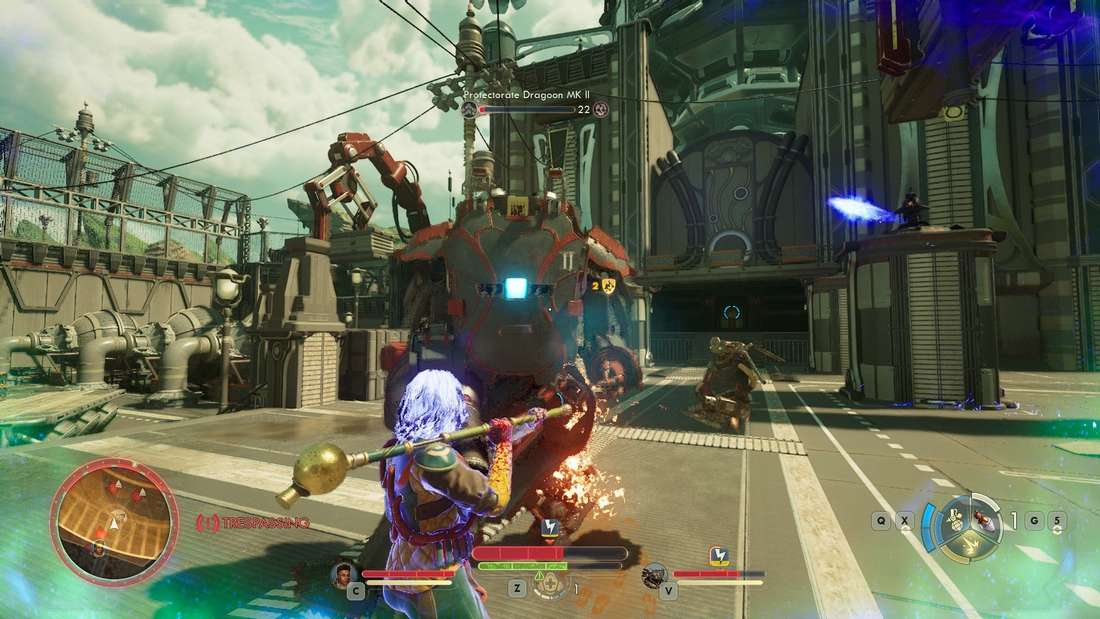
The universe of The Outer Worlds 2 is a vast, satirical, and dangerous expanse in the Arcadia star system, ripe for exploration and riddled with corporate bureaucracy. As a newly awakened Earth Directorate agent—the “Commander”—your journey is one of critical choices, tactical combat, and intense character specialization. This comprehensive Beginner’s Guide provides the fundamental tips and tricks you need to master your first hours, build an effective character, and thrive in this high-stakes RPG from Obsidian Entertainment.
Whether you’re a veteran of the first game or a newcomer to the sci-fi RPG genre, the sequel introduces revamped systems and new strategic depths. Mastering these early on is the key to unlocking the full replay value and ensuring you don’t spread your resources—or your character’s skills—too thin.
The Critical First Steps: Character Creation and Specialization
Your journey begins with Character Creation, where a few early decisions will dramatically shape your entire playthrough. The Outer Worlds 2 strongly rewards specialization over becoming a “jack-of-all-trades,” so focus is paramount.
- Choosing a Background and Traits: Your Background (e.g., Renegade, Professor) primarily offers role-playing flavor and unique dialogue options. Choose a Positive Trait (e.g., Brilliant, Nimble) that aligns with your desired playstyle (e.g., Brilliant for a talker/hacker, Nimble for a stealthy assassin).
The system of Traits is now even more integral. While you start with one positive, you will be offered Flaws (Negative Traits) throughout the game based on your actions (e.g., constantly failing dialogue checks might give you Foot-in-Mouth Syndrome). Accepting a Flaw grants an additional Perk point immediately—a massive boost—but the effects are permanent, so choose wisely.
- The Golden Rule of Skills: Focus, Focus, Focus: The skill system has been refined to be less forgiving of balanced builds. You receive two skill points per level. For a successful beginner build, pick 3–4 core skills and invest heavily in them.
- Early Game Priorities:
- Guns: The most reliable combat skill. Boosts all ranged weapon damage and armor penetration—essential for most encounters.
- Speech: A high-value asset for any playthrough. Unlocks dialogue options to talk your way out of fights, gain better rewards, or even bypass entire boss encounters.
- Lockpick/Hacking: Crucial for exploration and resource management. Get these to at least level 2 quickly to unlock the Pickpocket perk (from Lockpick) and open locked doors/terminals, providing shortcuts and access to rare loot.
- Engineering: Excellent for survival and utility. Allows you to repair your own armor and engage with power/machine systems in the world, often unlocking alternate quest paths.
- Early Game Priorities:
- The Single Respec Opportunity: A critical piece of advice: The game offers a single, one-time chance to respec (redistribute all skill points) at the end of the tutorial mission, just after the title card appears. Use the tutorial as a test run for your chosen playstyle. Once you move past this point, your skill choices are permanent.
 Combat & Gadgets: Mastering Tactical Time Dilation (TTD)
 Combat & Gadgets: Mastering Tactical Time Dilation (TTD)
The Outer Worlds 2 features snappier combat, improved mobility (including a new double-jump and slide mechanic), and the return of the franchise’s unique tactical slowdown system.
- Exploiting Tactical Time Dilation (TTD): Your TTD gadget is not just a combat tool; it’s an integral mechanic for movement and exploration. Use it to:
- Line up precise weak-spot shots (always target the head for extra damage).
- Dodge incoming fire or fast-moving enemies.
- Make difficult jumps or platforming sections easier.
- Assess a situation when you enter a crowded room.
Invest in the Science skill to increase your TTD energy capacity and duration.
- Beyond the TTD: Other Gadgets: You will acquire other gadgets, such as the Gas-Energy Deflection Apparatus (a temporary shield that also repels deadly Zyranium gas) and the N-Ray Scanner (allows you to see through walls and spot cloaked enemies). These are often essential for solving environmental puzzles or surviving in hazardous areas. Always check your gadget inventory and use the one that suits the situation.
- Weapon Diversity and Tinkering:
- Match Ammo to Enemy: Robots are vulnerable to Shock damage, while creatures and some humans are weak to Corrosion or Plasma. Always carry a variety of weapon types.
- Repair Your Gear: Regularly use a Workbench to repair your weapons and armor. Gear effectiveness drops drastically as durability decreases.
- Tinkering is Expensive: Upgrading a weapon’s level (Tinkering) becomes exponentially more expensive as the weapon’s level gets higher. It is usually more economical to swap out older gear for new, higher-level loot you find, rather than sinking massive amounts of Bit Cartridges (the in-game currency) into a low-level favorite.
The Essentials: Exploration, Companions, and Reputation
Your spaceship, the Incognito, is your mobile hub. It contains your crew, a Workbench for modding/repairing, and a storage locker. Always return here to manage your inventory and connect with your crew.
- Never Stop Exploring: The Outer Worlds 2 heavily rewards thorough exploration. Every nook, cranny, abandoned shack, or terminal could contain:
- Hidden Loot: Powerful unique weapons or armor.
- Quest Triggers: Side quests, optional objectives, or crucial intel (e.g., an email with a password) that provides an alternate solution to a main quest.
- Pickpocketing: The Pickpocket perk (unlocked by Lockpick) allows you to steal items from unaware NPCs with no reputation loss—an excellent source of keys, ammo, and high-tier items.
- Utilize Your Companions: Companions are not just a second gun; they are a vital part of your build:
- They provide a bonus to a few of your skills (e.g., Aza boosts Sneak and Lockpick). Choose your two active companions based on the skill checks you expect to face (e.g., bring Niles and Val for maximum combat and healing).
- Regularly visit their quarters on the Incognito to talk to them. This unlocks their personal companion quests, which are some of the best content in the game and often reward unique gear.
- Faction Reputation Matters: Your actions affect your standing with the numerous factions in Arcadia (e.g., The Protectorate). Good reputation can lead to better shop discounts and unique dialogue paths; bad reputation can make an area hostile. Be mindful of who you help and who you choose to kill, as faction heads are rarely unessential.
By focusing your skill points, mastering your gadgets, and embracing the deep role-playing possibilities the game offers, you’ll be well-equipped to handle the corporate overlords and alien threats of the Arcadia star system. Dive in, explore every corner of Paradise Island, and don’t be afraid to make a morally complex choice—that’s the heart of The Outer Worlds 2.
High CPC Keywords: The Outer Worlds 2 beginner’s guide, RPG character building, specialization, Tactical Time Dilation (TTD), Arcadia star system, companion quests, high-stakes RPG, Lockpick and Hacking, sci-fi RPG genre, skill checks, Flaws and Perks, replay value, Unreal Engine 5, Bit Cartridges.