
Sony Escalates Legal Battle: Injunction Sought Against Tencent’s ‘Light of Motiram’ Over Alleged Horizon IP Theft










Popular Now
 Schedule I
 FIFA 23
 R.E.P.O
 PUBG Mobile
 League of Legends
 Auto X Drift Racing 3
 Poppy Playtime
 Gacha Club
 Candy Crush Saga
 Counter-Strike 2
Sony Demands Preliminary Injunction in High-Stakes Intellectual Property War Against Tencent
The video game industry is witnessing a major legal confrontation as Sony Interactive Entertainment (SIE) files a motion for a preliminary injunction against Chinese tech behemoth Tencent Holdings over the latter’s upcoming title, Light of Motiram. Sony claims the game is a “slavish clone” of its acclaimed PlayStation exclusive franchise, Horizon Zero Dawn and Horizon Forbidden West, and is moving aggressively to halt pre-release promotion and development elements that allegedly infringe upon its copyright and trademark assets. This escalation in the lawsuit highlights the fierce protection of AAA intellectual property in the competitive global gaming market.
The dispute centers on allegations that Light of Motiram, an open-world survival game being developed by Tencent’s subsidiary, Polaris Quest/Aurora Studios, copies numerous protected elements of the Horizon franchise. Central to Sony’s claim is the main protagonist—a flame-haired tribal warrior huntress—who is argued to be an unmistakable lookalike of Horizon’s iconic character, Aloy. Sony is explicitly seeking to bar Tencent from using this character design, as well as specific visuals, storyline elements, and even a musical theme from the game’s trailer that allegedly mimics two compositions from the Horizon Zero Dawn original soundtrack.
The Core of the Infringement Claim: Aloy’s Identity and Brand Goodwill
Sony’s legal filings emphasize that the alleged copying is “so blatant” that the public, including journalists and fans, immediately and loudly denounced Light of Motiram as a “major Horizon rip off” upon its initial announcement in November 2024. For Sony, the damage is not merely potential, but ongoing, citing the erosion of control over their intellectual property and the confusion caused among consumers who might mistake Tencent’s offering for an official Horizon spin-off. This consumer confusion argument is a pillar of the trademark infringement aspect of the lawsuit, positioning Aloy not just as a character, but as a crucial brand symbol for the PlayStation platform.
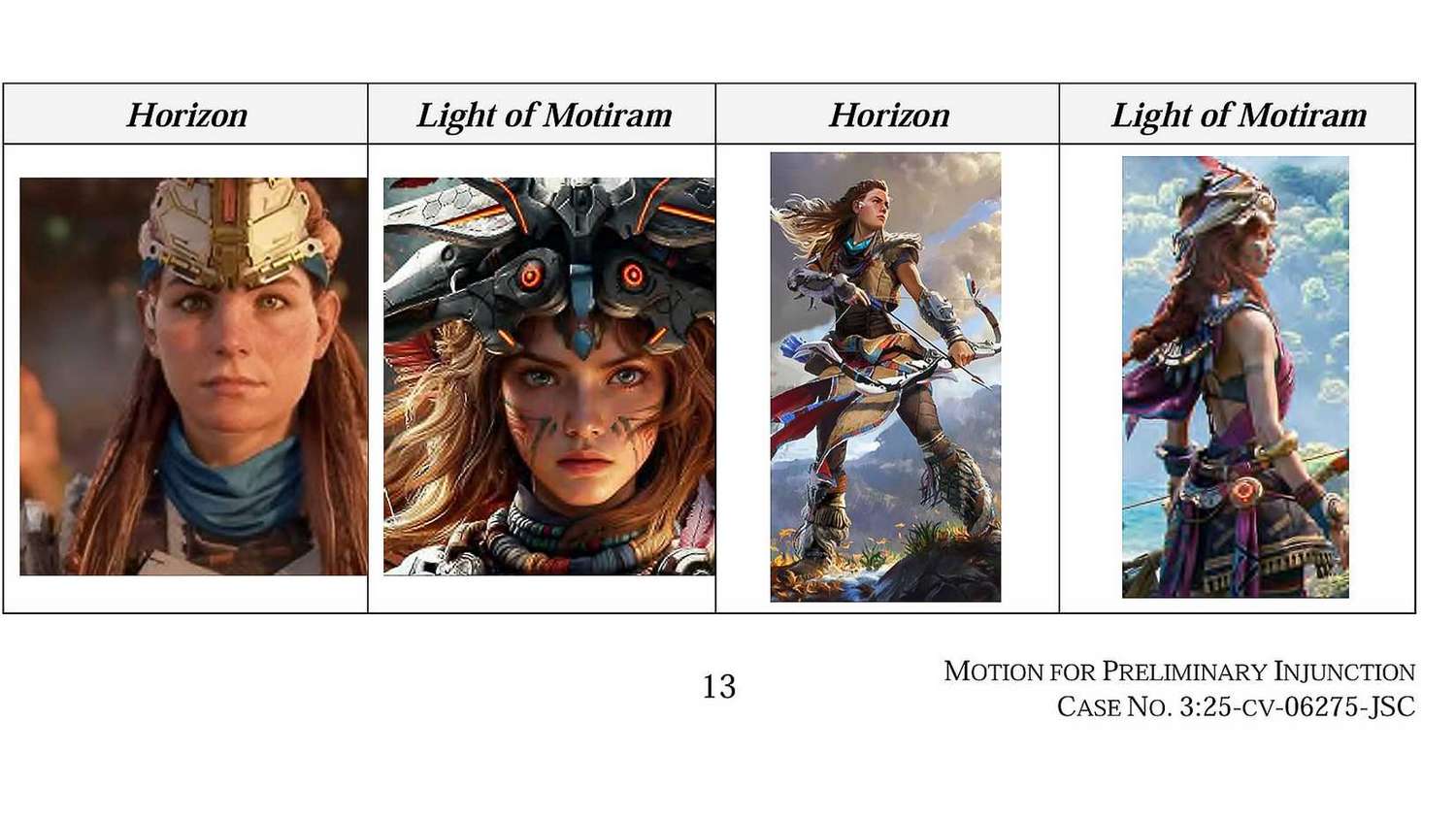
- Key Infringement Points Cited by Sony:
- Character design: The striking resemblance of Light of Motiram’s protagonist to Aloy, the “fierce tribal warrior huntress characterized by fiery red hair.”
- Aesthetic and Thematic Elements: The use of a post-apocalyptic setting, a tribal-tech fusion aesthetic, and distinct look-alike animal robot machines.
- Musical Score: Allegations that a melody in the game’s trailer is too similar to licensed Horizon music—a similarity further complicated by the fact that Tencent allegedly hired a composer who had previously worked on the Horizon Forbidden West score.
The motion for a preliminary injunction—a powerful legal tool—seeks a court order to prevent the promotion, copying, or release of Light of Motiram in its current form until the larger copyright lawsuit is settled. If granted, this could force Tencent to redesign significant parts of the game and pull existing promotional material, representing a massive financial and strategic blow for the Chinese gaming giant.
Tencent’s Defense: Genre Conventions and Timeliness
In response to the original lawsuit, and now the injunction request, Tencent has strongly contested Sony’s claims. Their defense, filed in a motion to dismiss, argues that the lawsuit is an “improper attempt to fence off a well-trodden corner of popular culture” and an “impermissible monopoly on genre conventions.” Tencent maintains that Light of Motiram merely employs “time-honored tropes” and genre ingredients already utilized by numerous other successful titles, including The Legend of Zelda: Breath of the Wild and Far Cry: Primal.
Furthermore, Tencent has challenged the timing of Sony’s injunction request. With Light of Motiram currently scheduled for a Q4 2027 release, Tencent argues that Sony “cannot possibly hope to demonstrate the ‘immediate threatened injury'” that is a prerequisite for a preliminary injunction. In a move that Sony’s lawyers have called a “shell game,” Tencent also quietly updated the Light of Motiram Steam page, removing several screenshots and the original cover image which prominently featured the Aloy-like protagonist, suggesting a preemptive, though perhaps insufficient, attempt to distance the game from the accusations.

This legal battle is not just about two games; it is about establishing the boundaries of creative inspiration versus intellectual property theft in a globalized industry where blockbuster titles can generate high revenue and their distinctive elements become highly recognizable, and therefore, highly valuable. The outcome will set a significant precedent for IP protection within the $200 billion global gaming market.